Key Takeaways
- Most businesses lose leads not because of poor traffic but because no system exists to guide visitors from awareness to purchase. The gap is almost never the traffic — it is the funnel sitting between the first click and the sale.
- In 2026, the traditional linear funnel, Awareness to Interest to Desire to Action, has evolved into a five-stage loop that includes Retention, because keeping a customer costs five times less than acquiring a new one.
- Top-of-funnel content without bottom-of-funnel conversion optimization is money spent creating traffic that never pays back.
- HubSpot, Google Analytics 4, and CRM integration are the three tools that turn a funnel from a concept into a measurable, improvable system.
- The single highest-leverage improvement most Canadian businesses can make is connecting their marketing data to their CRM so they know exactly which campaigns produce closed revenue, not just leads.
- Fantech Labs builds custom CRM integrations and digital infrastructure for Canadian businesses. Book a free consultation at fantechlabs.ca/contact-us.
What is a digital marketing strategy built around a sales funnel?
A digital marketing strategy built around your sales funnel assigns specific content, channels, and offers to each stage of the customer journey from the first time someone discovers your brand to the moment they become a repeat buyer. Rather than running disconnected campaigns, a funnel-based strategy ensures every marketing activity serves a defined stage, moves prospects forward, and can be measured against real business outcomes. In 2026, with customer journeys increasingly non-linear and influenced by social proof, AI-driven personalization, and multiple touchpoints, a structured funnel strategy is the foundation of predictable revenue growth.
WHY MOST DIGITAL MARKETING STRATEGIES FAIL WITHOUT A FUNNEL FRAMEWORK
Most businesses pour budget into the top of the funnel, then watch leads quietly leak out the sides because there is no system guiding people from initial awareness to actual purchase. The gap is almost never the traffic. It is the lack of a structured path between that first click and the moment someone pays.
A digital marketing funnel is the structured path a prospect follows from first discovering your brand to becoming a paying and ideally repeat customer. It maps the customer journey into clear stages and assigns the right content, channel, and offer to each one, so people keep moving forward instead of dropping off.
Without this structure, three things happen consistently. Marketing teams optimize for vanity metrics like impressions and clicks rather than pipeline contribution. Sales teams receive leads that are not ready to buy and burn time qualifying them manually. Leadership cannot identify which campaigns actually produced revenue because the data does not connect from first touch to closed deal.
The Old Funnel vs The 2026 Reality
For decades, the sales funnel was depicted as an inverted pyramid. You pour a lot of prospective customers in at the top and gravity pulls a few paying customers out at the bottom. That model assumes the customer journey is linear. It assumes a person sees an ad, clicks it, and buys immediately. In 2026, the buying process is messy, chaotic, and heavily influenced by social proof.
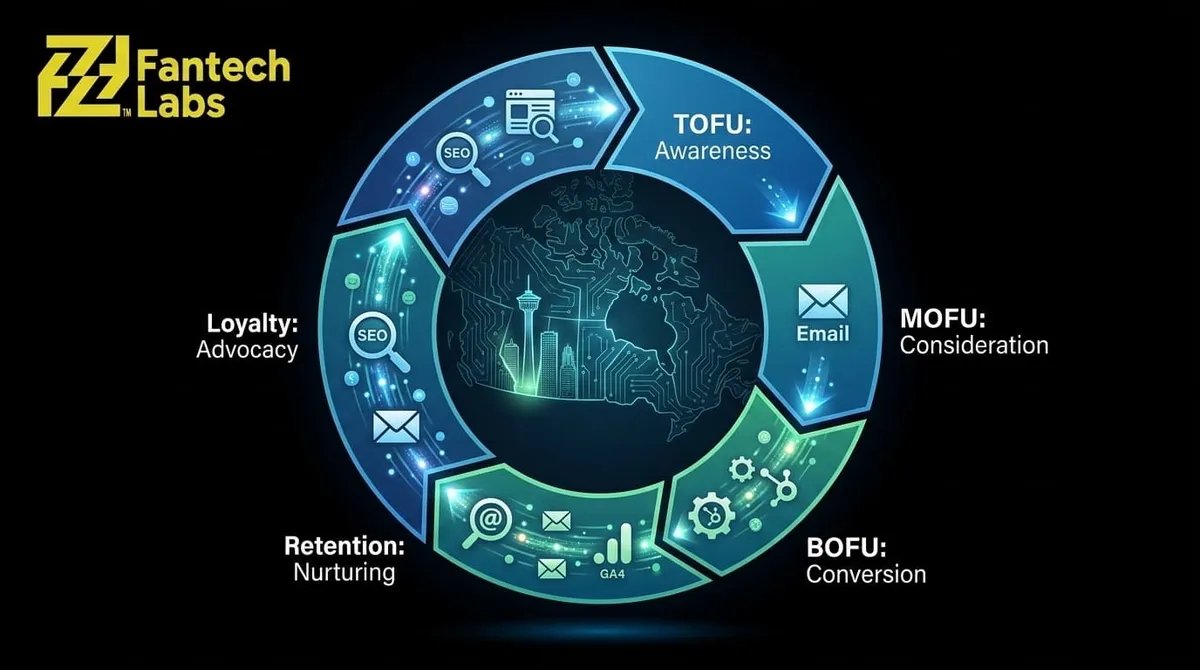
In 2026, a modern digital marketing funnel adds a fifth stage — Retention — because keeping a customer costs far less than acquiring a new one. The modern funnel is better described as a loop: Awareness, Interest, Consideration, Conversion, Loyalty, and back to Awareness through referral and advocacy.
THE FIVE STAGES OF A MODERN MARKETING FUNNEL IN 2026
Understanding what each stage requires is the foundation of an effective funnel-based strategy. Each stage needs different content, different channels, and different success metrics.
Stage 1: Top of Funnel (TOFU) - Awareness
At the top of the funnel, prospects do not know who you are. They have a problem and they are searching for information, not solutions. Your job at this stage is to be visible, useful, and trustworthy before asking for anything in return.
At the top of the funnel, content is king. Create informative and engaging content such as blog posts, infographics, and videos to address topics related to your industry or niche. This content positions you as a thought leader by providing key insights. Leverage social media platforms such as LinkedIn, Instagram, and Facebook to build a strong online presence and foster a sense of community around your brand.
The right content for this stage includes SEO-optimized blog posts targeting informational keywords, short-form video content on LinkedIn and YouTube, educational resources such as guides and checklists, and paid social campaigns targeting cold audiences based on interest and demographic signals.
The metric that matters at TOFU is not conversion. It is rich, organic traffic growth, and brand search volume over time. Measuring TOFU campaigns by immediate revenue is the most common mistake in digital marketing strategy.
Stage 2: Middle of Funnel (MOFU) - Consideration
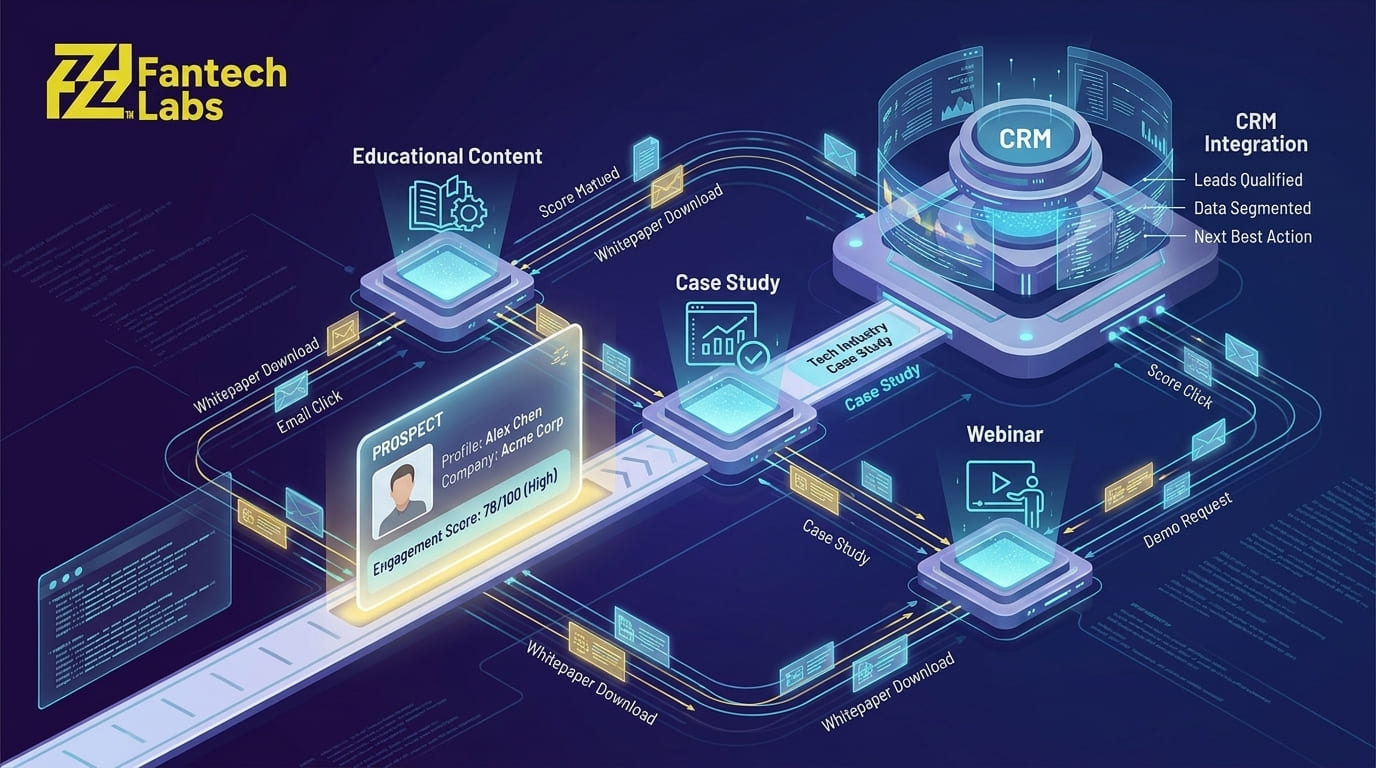
At the middle of the funnel, prospects know they have a problem and they know you exist. They are evaluating whether you are the right solution compared to alternatives. This is where most marketing strategies fall apart - businesses either push for the sale too early or fail to nurture the relationship at all.
The content that works at MOFU is more specific and solution-oriented. Case studies with real outcomes, comparison guides, webinars and live demonstrations, email sequences that address specific objections, and retargeting campaigns that keep your brand visible while prospects research alternatives all perform well at this stage.
Lead capture is essential here. A gated resource, a free consultation booking, or a demo request converts interested visitors into identifiable leads that can be nurtured through your CRM. Without lead capture at MOFU, you have no visibility into how many interested prospects are in your pipeline.
Stage 3: Bottom of Funnel (BOFU) - Conversion
At the bottom of the funnel, prospects are ready to make a decision. They are comparing your specific offer against alternatives and looking for reasons to commit or reasons to delay. This is the stage where trust signals, clear offers, and friction reduction determine whether deals close.
Trust signals must be embedded throughout the pipeline, not hidden at the bottom of a page. When trust is layered strategically, resistance reduces. Vague offers reduced conversion. Specific offers increase action.
The content and tactics that work at BOFU include specific testimonials and case studies with named clients and measurable results, clear and specific offers with no ambiguity about what the prospect gets, streamlined booking or purchase flows with minimal friction, and personal outreach from sales when deal size justifies it.
The conversion rate from BOFU visits to closed deals is the metric that ultimately determines whether your marketing investment is profitable. If TOFU traffic is strong and BOFU conversion is weak, the problem is almost always trust, offer clarity, or friction in the conversion path.
Stage 4: Conversion - Closing the Deal
The conversion stage is the moment a prospect becomes a customer. In 2026, this moment is rarely the result of a single touchpoint. Research consistently shows that B2B buyers have an average of 6 to 8 meaningful interactions with a brand before making a purchase decision. B2C buyers in considered purchases show similar patterns.
This means your conversion optimization work is not just about the landing page or checkout flow. It is about the cumulative trust built across every stage of the funnel that precedes the conversion moment.
Practical conversion optimization at this stage involves A/B testing headlines and calls-to-action, reducing form fields to the minimum required, adding social proof directly adjacent to the conversion action, and ensuring mobile experience is fully optimized since over 60% of B2C and a growing share of B2B conversions now happen on mobile.
Stage 5: Post-Conversion - Retention and Advocacy
A great digital marketing funnel does not end at the sale. The most profitable businesses build long-term relationships with existing customers through post-purchase marketing efforts. The goal is to turn paying customers into repeat buyers and brand advocates. This final stage is often ignored, but it is where the most effective marketing funnel delivers the highest ROI.
The tactics that drive retention and advocacy are structured onboarding sequences for new customers, regular value-add communication that is not purely promotional, loyalty programs where applicable, proactive customer success outreach for high-value accounts, and systematic review and referral requests at the right moment in the customer lifecycle.
A customer who refers to another customer has a customer acquisition cost of zero. The loop is the secret weapon that backs digital marketing strategies of high-growth brands. Referral and advocacy loops are consistently the highest-ROI marketing channel for businesses that invest in building them deliberately.
BUILDING YOUR FUNNEL-BASED MARKETING STRATEGY: A PRACTICAL FRAMEWORK
Knowing the funnel stages is not the same as having a strategy. A strategy assigns specific actions, resources, and measurement frameworks to each stage for your specific business.
Step 1: Define Your Ideal Customer Profile
Before mapping content to funnel stages, you need clarity on who the funnel is designed for. A vague ICP produces vague content that attracts unqualified leads. A specific ICP produces content that speaks directly to a defined audience and converts at a meaningfully higher rate.
For B2B, define your ICP by company size, industry, geography, technology stack if relevant, and the specific role and pain points of your primary decision-maker. For B2C, define by demographic profile, behavioral patterns, purchase motivations, and the specific problem your product solves better than alternatives.
Step 2: Map Content to Each Funnel Stage
Once your ICP is defined, map existing and planned content to each funnel stage. An honest content audit almost always reveals the same pattern: too much TOFU content, insufficient MOFU nurture sequences, and weak BOFU conversion assets.
For each stage, identify the specific questions your prospect is asking, the content format most likely to reach them, the channel where they consume that format, and the next action you want them to take after consuming the content.
Step 3: Set Up Your Measurement Infrastructure
A funnel strategy without measurement infrastructure is a hypothesis, not a system. The three tools that turn a funnel into a measurable, improvable system are Google Analytics 4, HubSpot, and CRM integration.
Google Analytics 4 tracks how users move through your website across sessions and devices. Set up conversion events for each stage transition: content download for MOFU, consultation booking for BOFU, and purchase for conversion. Without stage-specific conversion events, you cannot identify where the funnel is leaking.
HubSpot enables lead capture, email nurture automation, and pipeline tracking across the full customer journey. The most valuable capability HubSpot adds is contact-level tracking — knowing which specific content pieces and campaigns influenced each lead before they converted.
CRM integration is the step that closes the loop between marketing activity and closed revenue. Without connecting your marketing data to your CRM, you can optimize for lead volume but not for lead quality. Fantech Labs builds custom CRM integrations for Canadian businesses that connect marketing platforms, lead capture tools, and sales systems into a unified data layer. Learn more at fantechlabs.ca/services.
Step 4: Build Stage-Specific Lead Nurture Sequences
Most leads are not ready to buy when they first enter your funnel. Lead nurturing is the process of building trust and maintaining visibility with prospects who are interested but not yet ready to commit.
A well-structured email nurture sequence for a B2B service business typically includes an immediate value delivery email with the resource the prospect downloaded, a problem-focused educational email two to three days later that demonstrates understanding of their specific pain, a social proof email at day seven with a relevant case study or testimonial, an objection-handling email at day fourteen addressing the most common reasons prospects delay, and a clear conversion offer email at day twenty-one.
The sequence cadence and content should be adjusted based on your sales cycle length. For a 90-day B2B sales cycle, the nurture sequence should span at least 60 days before the conversion offer is made.
Step 5: Implement Conversion Rate Optimization Continuously
Landing page optimization is the process of refining a page designed for a specific action in order to increase conversion rates. This includes improving messaging clarity, layout, social proof placement, and mobile usability.
Conversion rate optimization is not a one-time project. It is a continuous process of forming hypotheses about why prospects are not converting, testing changes, and measuring the result. Even a 1% improvement in conversion rate at the bottom of the funnel can double revenue if top-of-funnel volume is maintained.
The highest-leverage CRO opportunities are almost always headline clarity, reduction of friction in the conversion path, addition of trust signals adjacent to the call-to-action, and mobile experience optimization.
HUBSPOT, GOOGLE ANALYTICS 4, AND CRM INTEGRATION: THE MEASUREMENT STACK
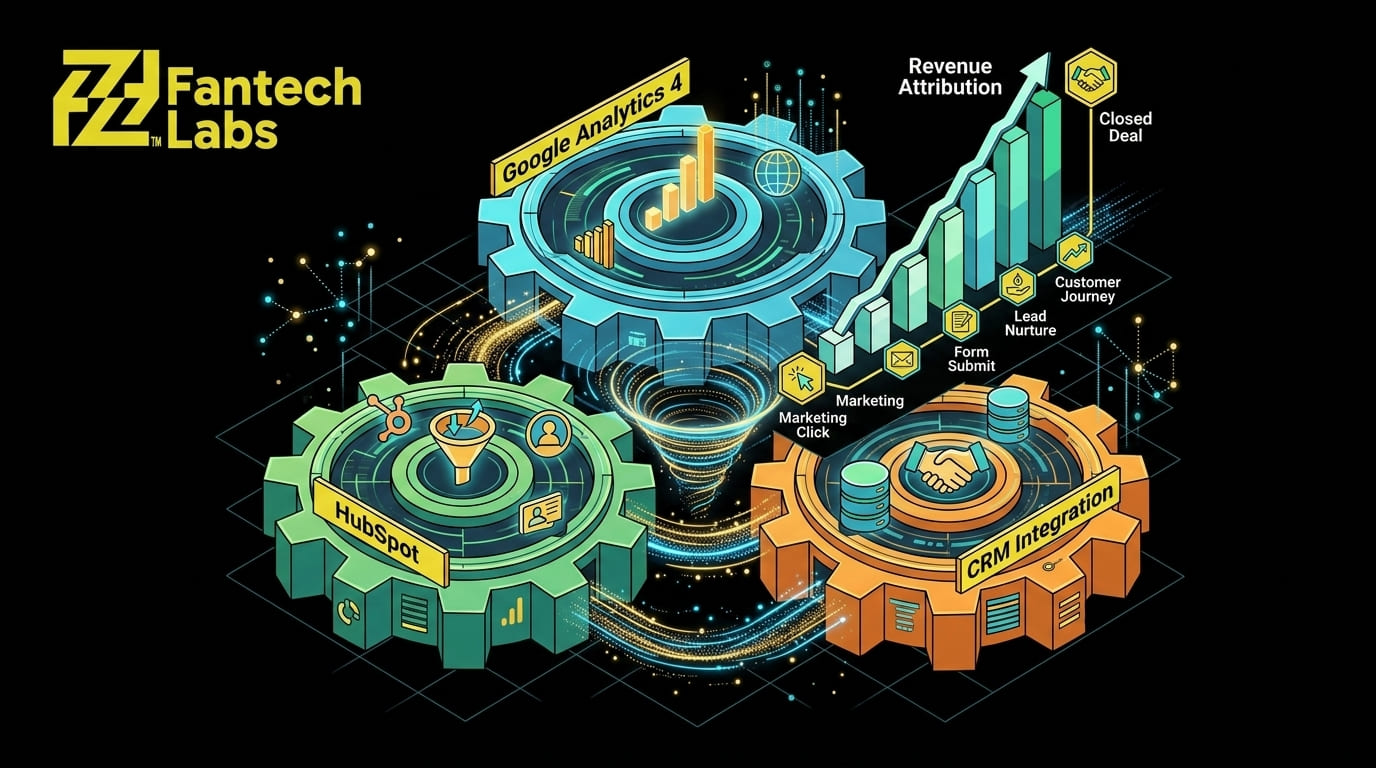
The tools you use to measure your funnel determine how quickly you can improve it. In 2026, the standard measurement stack for a funnel-based digital marketing strategy consists of three connected layers.
Google Analytics 4 for Behavioral Data
Google Analytics 4 tracks user behavior across your website including pages visited, time on site, scroll depth, and conversion events. The critical configuration step that most businesses skip is setting up custom conversion events for each funnel stage transition. Without this configuration, GA4 shows you traffic volume but not funnel movement.
Key reports to monitor weekly are the funnel exploration report which shows drop-off between stages, the traffic source report which shows which channels are producing visitors who actually convert, and the user lifetime report which shows the total revenue value generated by users from each acquisition source.
HubSpot for Lead Management and Nurturing
HubSpot connects your lead capture forms, email sequences, and sales pipeline into a single contact database. The most valuable workflow to configure is automatic lead scoring based on contact behavior — visits to pricing pages, email opens, case study downloads, and demo requests all signal buying intent and should trigger different nurture paths.
HubSpot's attribution reporting allows you to see which content pieces and campaigns influenced each closed deal, giving your marketing team the data needed to invest more in what works and stop spending on what does not.
CRM Integration for Revenue Attribution
The gap between most marketing measurement and business reality is revenue attribution. Marketing teams often optimize for lead volume while sales teams judge lead quality. A CRM integration that connects your marketing platform data to your sales pipeline data closes this gap.
With proper CRM integration, you can identify which specific blog posts, ad campaigns, and email sequences contributed to closed revenue. This is the data that justifies marketing budget increases and identifies where to cut spend.
Fantech Labs builds custom Salesforce, HubSpot, and proprietary CRM integrations for Canadian businesses that connect marketing, sales, and operations data into a single source of truth. Learn more at fantechlabs.ca/services.
PIPEDA COMPLIANCE IN CANADIAN MARKETING FUNNELS
Canadian businesses running digital marketing funnels must ensure their lead capture, email marketing, and data storage practices comply with PIPEDA and CASL, Canada's Anti-Spam Legislation.
PIPEDA requires explicit informed consent before collecting personal information, a clear privacy policy accessible from any lead capture form, a mechanism for contacts to access or delete their data, and data minimization meaning you collect only what you actually need.
CASL requires express consent before sending commercial electronic messages, a clear identification of the sender in every message, and an easy unsubscribe mechanism that processes within 10 business days.
Non-compliance with CASL can result in administrative monetary penalties of up to $10 million per violation for organizations. Building compliant consent flows and data handling practices into your funnel from the start is significantly less expensive than remediation after a complaint.
COMPARE OPTIONS WITH FANTECH LABS
Step 1: Book a free consultation at fantechlabs.ca/contact-us to discuss your current marketing funnel and measurement gaps.
Step 2: We audit your existing marketing stack, CRM, and data flows to identify where leads are leaking and where attribution is missing.
Step 3: We design the integration architecture that connects your marketing platforms, lead capture tools, and CRM into a unified data layer.
Step 4: Development and configuration proceed with your team's full visibility at every stage.
Step 5: Post-launch support includes ongoing integration monitoring and optimization as your marketing stack evolves.
Frequently Asked Questions
What is a funnel-based digital marketing strategy?
A funnel-based digital marketing strategy assigns specific content, channels, and offers to each stage of the customer journey from awareness through retention. Rather than running disconnected campaigns, every marketing activity serves a defined stage and can be measured against pipeline contribution and closed revenue.
What are the stages of a marketing funnel in 2026?
The modern marketing funnel in 2026 has five stages: Awareness at the top of the funnel, Consideration in the middle, Conversion at the bottom, and Post-Purchase Retention which loops back to Awareness through referral and advocacy. The traditional four-stage AIDA model has evolved to include Retention as a distinct fifth stage.
How does HubSpot integrate with a sales funnel strategy?
HubSpot connects lead capture forms, email nurture sequences, and sales pipeline data into a single contact database. It enables lead scoring based on contact behavior, automated nurture sequences triggered by prospect actions, and attribution reporting that shows which campaigns contributed to closed revenue.
What is conversion rate optimization in a marketing funnel?
Conversion rate optimization is the continuous process of testing changes to landing pages, calls-to-action, and conversion flows to increase the percentage of visitors who take the desired next step. Even a 1% improvement in bottom-of-funnel conversion rate can significantly increase total revenue without increasing traffic spend.
How does CRM integration improve marketing funnel performance?
CRM integration connects marketing platform data to your sales pipeline, allowing you to attribute closed revenue to specific campaigns, content pieces, and channels. Without this connection, marketing teams optimize for lead volume while sales teams judge lead quality, creating misalignment that reduces overall funnel efficiency.
What is CASL and how does it affect email marketing in Canada?
CASL, Canada's Anti-Spam Legislation, requires express consent before sending commercial electronic messages, clear sender identification in every message, and an easy unsubscribe mechanism processed within 10 business days. Non-compliance can result in penalties of up to $10 million per violation for organizations.
SUMMARY: BUILDING A DIGITAL MARKETING STRATEGY AROUND YOUR SALES FUNNEL IN 2026
First, audit your current funnel to identify where leads are leaking. In most businesses, the problem is not TOFU traffic volume. It is MOFU nurture and BOFU conversion.
Second, map specific content, channels, and offers to each funnel stage rather than running disconnected campaigns.
Third, configure Google Analytics 4 with stage-specific conversion events so you can measure funnel movement, not just traffic volume.
Fourth, connect your marketing platform to your CRM so you can attribute closed revenue to specific campaigns. This is the single highest-leverage measurement improvement most businesses can make.
Fifth, build PIPEDA and CASL compliance into your lead capture and email marketing from the start. Retrofitting compliant consent flows after a complaint is significantly more expensive than building them correctly the first time.
Book Your Free Digital Marketing Strategy Consultation at Fantech Labs →
Conclusion
A digital marketing strategy built around your sales funnel is not a marketing luxury. It is the infrastructure that turns advertising spend into predictable revenue. The businesses that win in 2026 are not the ones spending the most on traffic. They are the ones with the clearest funnel, the tightest measurement, and the most disciplined process for moving prospects from first touch to loyal customer.
Why Trust Fantech Labs
At Fantech Labs, we build software that solves real business problems for Canadian companies. Our senior developers are directly involved in every project, our case studies are published with real client names, and our post-launch support is structured rather than ad hoc.
Disclaimer: Information provided is for educational purposes only. Digital marketing strategies, platform capabilities, and regulatory requirements are subject to change. Always consult qualified marketing and legal professionals before making significant strategy or compliance decisions.