KEY TAKEAWAYS
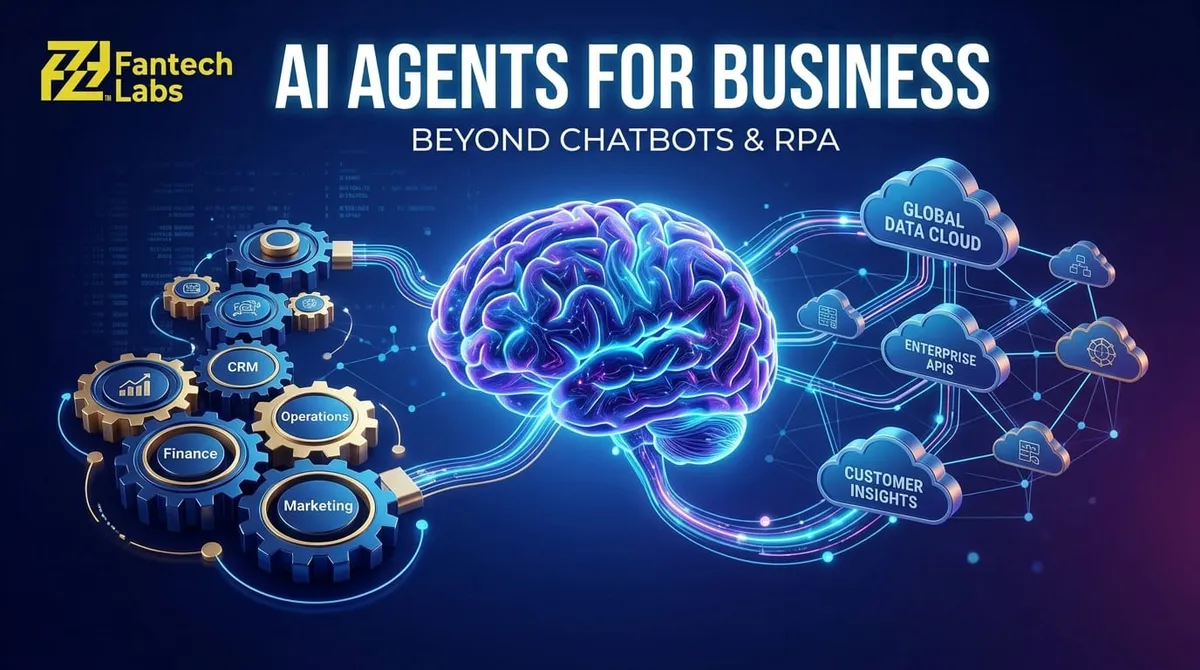
● AI agents go beyond chatbots: Unlike simple AI assistants, AI agents for business can plan multi-step tasks, use tools, and take actions autonomously without constant human input.
● They replace entire workflows, not just tasks: Where traditional RPA automates a single repetitive step, AI agents can handle end-to-end business processes that involve decision-making and variation.
● Task-specific agents outperform general ones: The most effective business deployments in 2026 use narrowly scoped agents trained or prompted for a specific function - not one general-purpose AI doing everything.
● Human oversight remains critical: The highest-value use cases pair AI agents with human review checkpoints, especially for customer-facing, financial, or compliance-sensitive workflows.
● Adoption is accelerating across all business sizes: From enterprise Fortune 500 teams to SMBs, AI agents are moving from pilot projects to core operational infrastructure in 2026.
FEATURED SNIPPET ANSWER
AI agents for business are software systems that can plan, decide, and act across multi-step workflows without requiring human input at every step. Unlike traditional automation tools that follow fixed rules, AI agents interpret goals, select the right tools or data sources, and adjust their approach based on results. In 2026, businesses are deploying task-specific AI agents across sales, customer support, operations, finance, and software development to reduce manual work and accelerate decision-making.
WHAT AI AGENTS ACTUALLY ARE - AND WHAT THEY ARE NOT
There is a lot of confusion in the market about what AI agents for business actually do. Marketing language from software vendors has made the term feel interchangeable with chatbots, virtual assistants, and RPA bots. They are not the same thing.
A chatbot answers questions. It waits for a user to ask something, generates a response, and stops.
An RPA bot follows a script. It clicks the same buttons in the same order every time, with no ability to adapt when something changes.
An AI agent pursues a goal. It breaks the goal into steps, decides which tools or data sources to use, takes actions, evaluates the results, and adjusts - often without any human involvement until the task is complete.
This distinction matters enormously when evaluating what AI can actually do for your business operations in 2026.
HOW AI AGENTS WORK IN A BUSINESS CONTEXT
The Core Components of a Business AI Agent
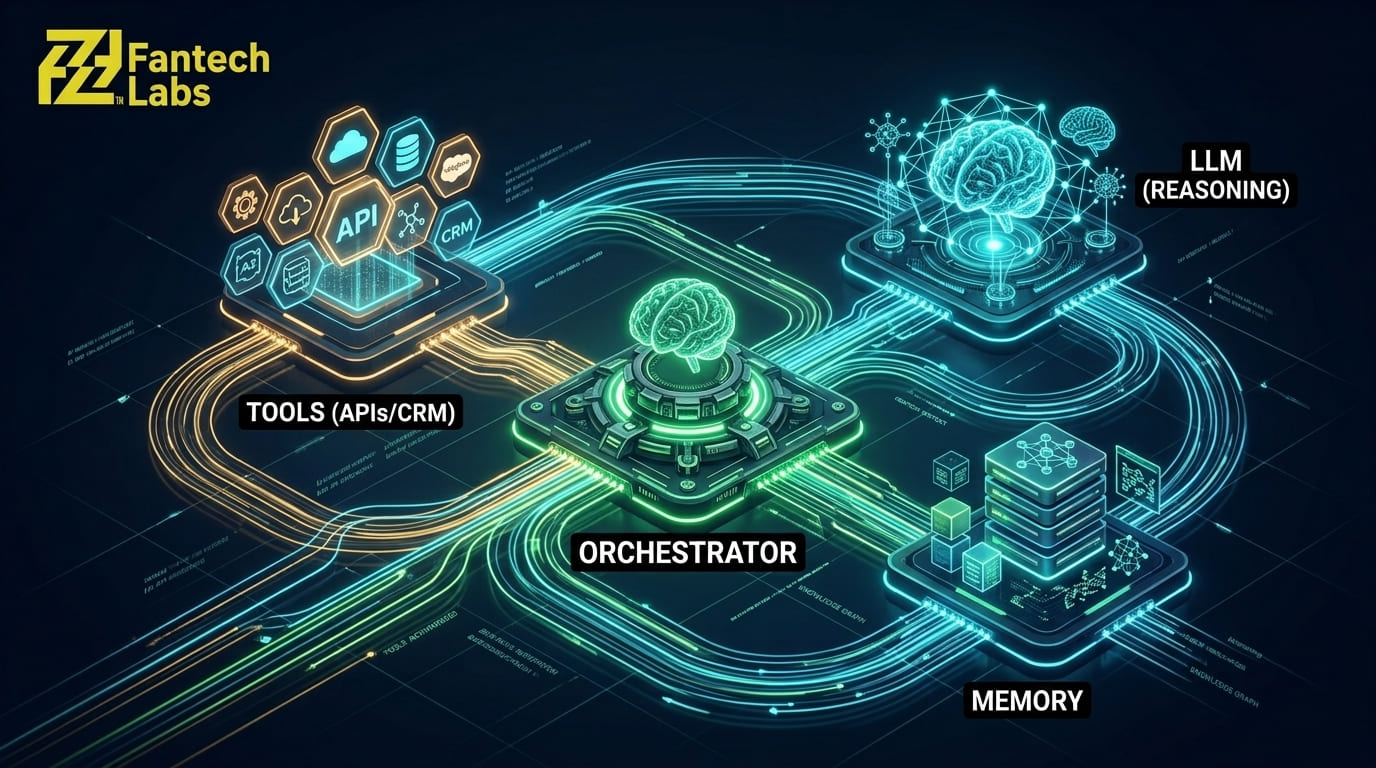
Every AI agent deployed in a business setting operates on the same fundamental architecture, regardless of the vendor or platform:
● A language or reasoning model: The intelligence layer - typically a large language model from providers like OpenAI or Anthropic - that interprets instructions and decides what to do next.
● A set of tools: APIs, databases, browsers, code interpreters, email systems, CRMs, or any other software the agent can interact with to complete tasks.
● Memory: Short-term memory (the current task context) and sometimes long-term memory (stored knowledge about past interactions or business rules).
● An orchestration layer: The system that manages how the agent plans its steps, handles errors, and decides when to escalate to a human.
The Difference Between Agents and Traditional Automation
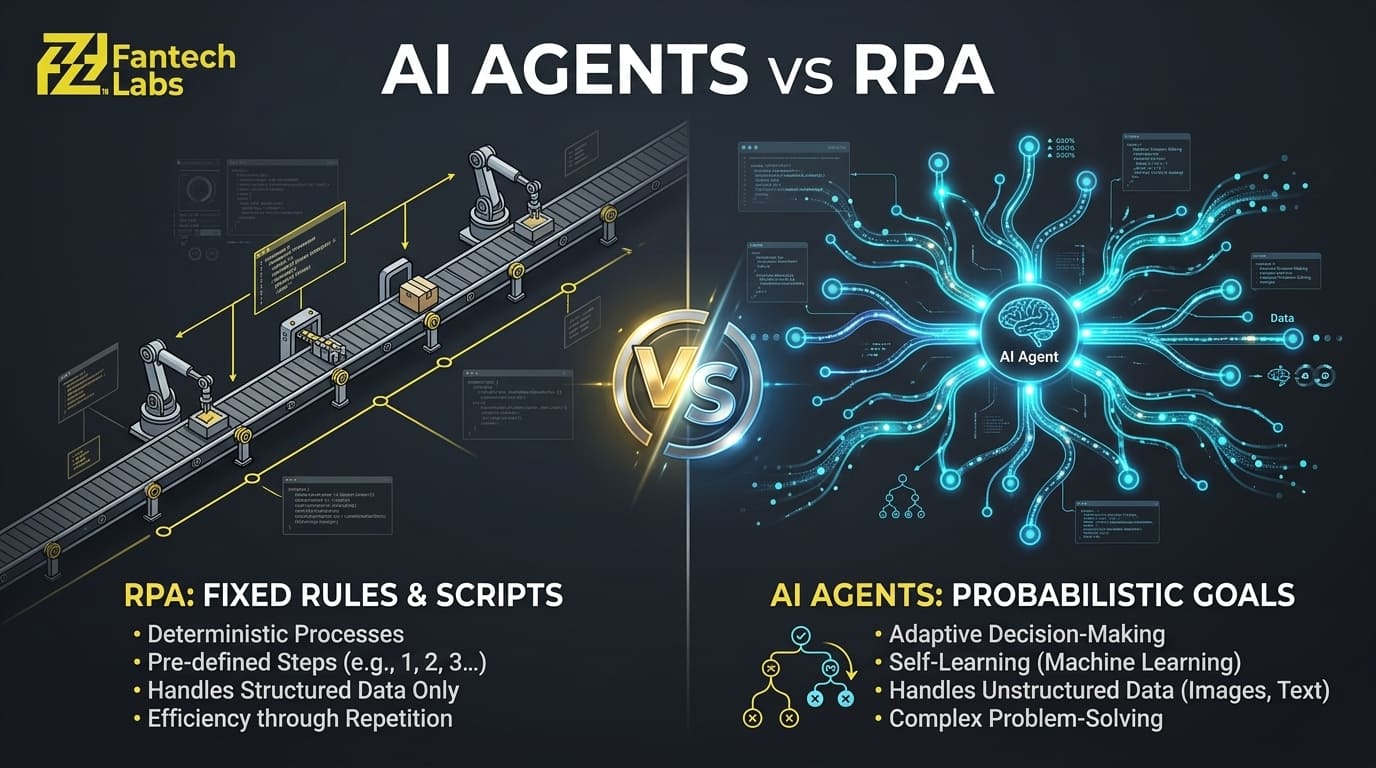
Traditional business process automation - including RPA tools from vendors like UiPath and Automation Anywhere - works by recording and replaying sequences of actions. It is deterministic. If the interface changes, the bot breaks.
AI agents are probabilistic. They interpret what needs to happen and figure out how to do it, even when the environment varies. This makes them far more capable in unstructured or variable workflows, and far more complex to govern correctly.
Gartner's 2025 analysis of enterprise AI adoption noted that agentic AI is the fastest-growing category of enterprise software investment, with organizations moving from single-task automation to multi-agent systems that coordinate across departments.
WHAT TASK-SPECIFIC AI AGENTS ARE DOING FOR BUSINESSES IN 2026
The most successful enterprise AI deployments are not trying to build one agent that does everything. They are building fleets of task-specific AI agents, each scoped to a narrow function and integrated into existing workflows. Here is where they are delivering the most measurable value:
Sales and Lead Qualification
AI agents are handling the top-of-funnel work that previously consumed hours of sales representative time. A typical sales AI agent in 2026 can:
● Research inbound leads by pulling data from LinkedIn, company websites, and CRM records
● Score leads against ideal customer profile criteria
● Draft personalized outreach emails based on the prospect's industry, role, and recent activity
● Schedule discovery calls by coordinating availability across calendars
● Update CRM records after each interaction without manual data entry
The result is that human sales reps spend their time on qualified conversations, not on research and administrative work.
Customer Support and Issue Resolution
AI agents in customer support have moved well beyond FAQ bots. In 2026, enterprise support agents can:
● Interpret natural language support tickets and categorize them by type, priority, and urgency
● Retrieve customer history, account status, and past interactions from multiple systems
● Resolve common issues autonomously - password resets, order status updates, subscription changes - without human involvement
● Draft responses for complex issues and route them to the right human agent with full context attached
Companies deploying AI agents in support report significant reductions in first-response time and measurable improvements in customer satisfaction scores for routine issue types.
Finance and Accounts Processing
Finance teams are using AI agents to handle high-volume, rule-governed processes that traditionally required large operations teams:
● Invoice processing - extracting line items, matching against purchase orders, flagging discrepancies
● Expense report review - checking receipts against policy, identifying anomalies, approving or escalating
● Financial report generation - pulling data from multiple sources, running calculations, producing formatted summaries
● Accounts receivable follow-up - identifying overdue accounts and sending escalating outreach sequences
Software Development and Code Review
AI agents are transforming software development workflows. Tools built on models from Anthropic, OpenAI, and others can now:
● Write boilerplate code from a specification
● Review pull requests for bugs, security vulnerabilities, and style violations
● Write and run unit tests against new code
● Update documentation when code changes
● Triage bug reports and suggest likely root causes based on code history
Development teams using AI coding agents consistently report faster sprint cycles and lower defect rates in code review.
Operations and Internal Process Automation
Beyond customer-facing and development workflows, AI agents are handling internal operational tasks:
● HR onboarding - triggering account creation, sending documentation sequences, scheduling orientation sessions
● Procurement - comparing vendor quotes, generating purchase order drafts, tracking approval workflows
● Reporting and analytics - pulling data from multiple systems, running analysis, distributing formatted reports to stakeholders on a schedule
WHAT INTELLIGENT WORKFLOW AUTOMATION LOOKS LIKE IN PRACTICE
Single-Agent vs. Multi-Agent Architectures
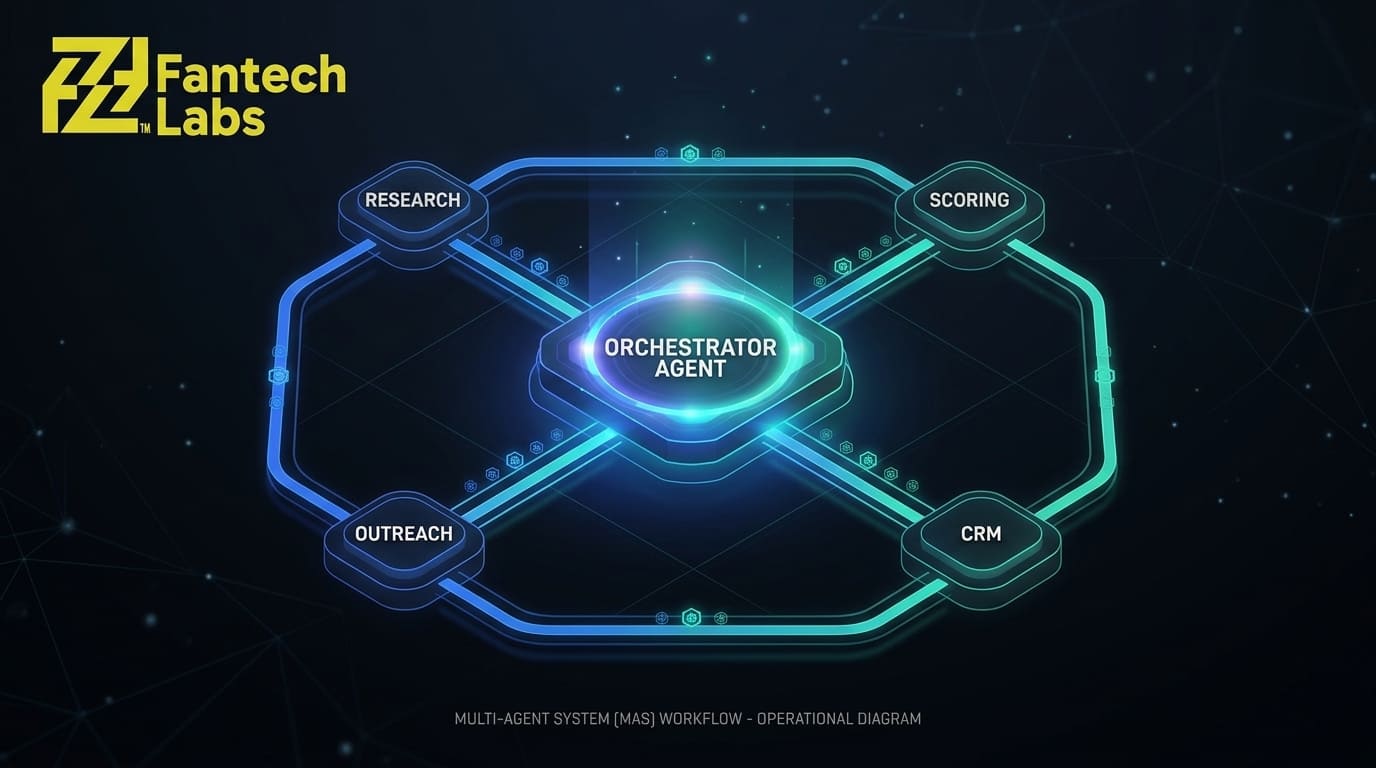
A single AI agent handles a defined task end-to-end. A multi-agent system uses multiple specialized agents that hand off work to each other, supervised by an orchestrating agent that manages the overall workflow.
For example, a sales pipeline multi-agent system might include:
● Research agent: Gathers and structures information about a prospect
● Scoring agent: Evaluates the prospect against ICP criteria and assigns a score
● Outreach agent: Drafts and sends the first contact message
● Scheduling agent: Handles back-and-forth to book a discovery call
● CRM agent: Updates all records and sets follow-up reminders
Each agent is specialized. The orchestrator ensures they work in sequence and handles exceptions when something goes wrong.
Where Human Oversight Still Belongs
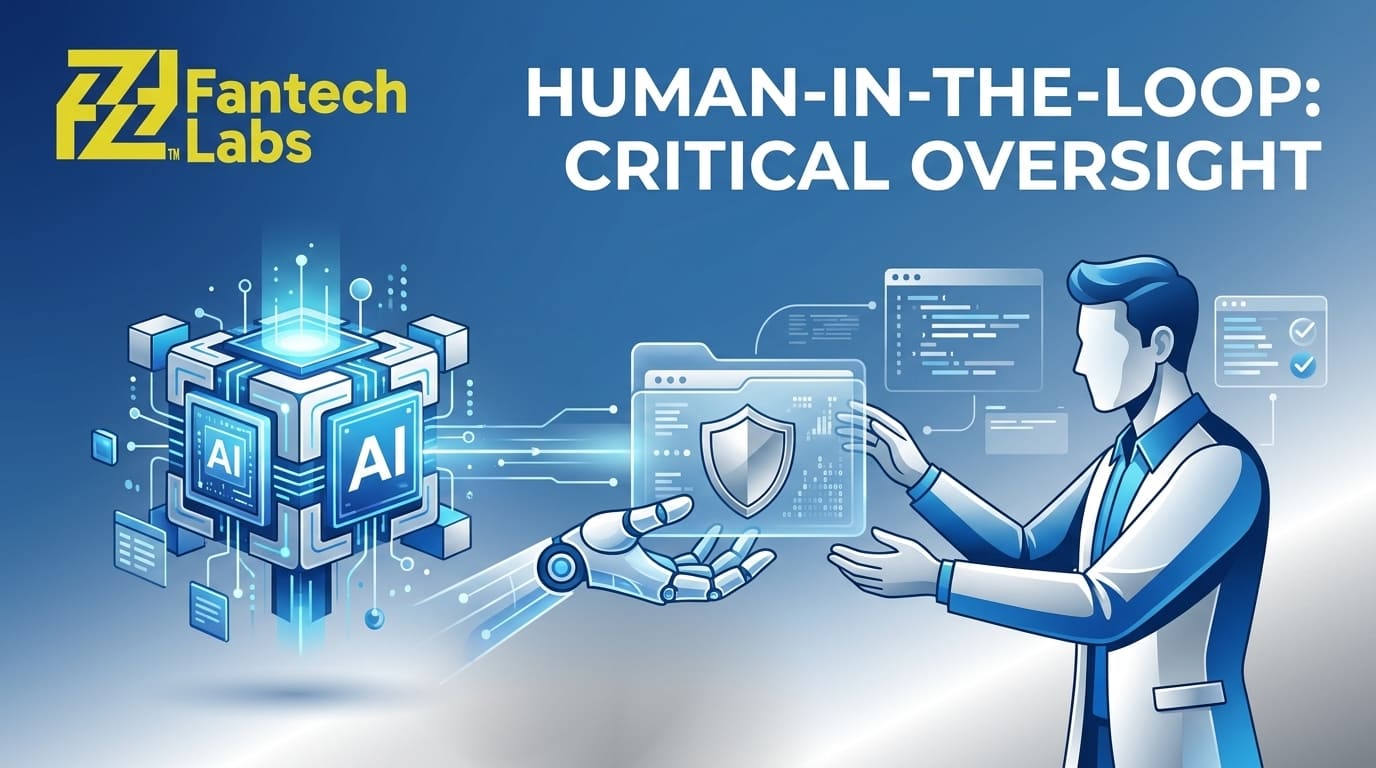
The most mature enterprise AI deployments in 2026 are not fully autonomous. They include deliberate human-in-the-loop checkpoints for:
● High-value customer communications before they are sent
● Financial transactions above a defined threshold
● Legal or compliance-sensitive decisions
● Any output that will be published publicly or shared with external stakeholders
The goal is not to remove humans from the process. It is to remove humans from the parts of the process that do not require human judgment, so they can focus on the parts that do.
ENTERPRISE AI ADOPTION: WHERE BUSINESSES ARE STARTING
For organizations that are new to AI agents for business, the highest-ROI starting points in 2026 are consistently:
1. High-volume, repetitive tasks with clear success criteria - invoice processing, lead research, support ticket triage
2. Workflows with available data and system integrations - agents need access to your CRM, ERP, or helpdesk to be effective
3. Processes where errors are recoverable - start with internal workflows before customer-facing ones
4. Tasks with measurable baselines - so you can quantify the ROI of automation against current human hours
Organizations that try to automate complex, high-stakes processes first typically struggle. Those that start with constrained, well-defined workflows and expand from there see the most consistent results.
HOW FANTECH LABS BUILDS AI AGENT SOLUTIONS FOR BUSINESSES
At Fantech Labs, we design and build custom AI agent systems for businesses that need more than off-the-shelf automation. Our team works with clients to identify the workflows where AI agents will deliver the highest return, architect the right agent structure for their environment, and integrate agents securely with existing business systems.
Whether you need a single task-specific agent or a coordinated multi-agent workflow, Fantech Labs delivers production-ready AI automation that fits your operations - not a generic template. Visit fantechlabs.ca to start a conversation about what AI agents can do for your business.
FREQUENTLY ASKED QUESTIONS
What is an AI agent for business?
An AI agent for business is a software system that can plan and execute multi-step tasks autonomously. Unlike chatbots that only respond to questions, AI agents interpret a goal, choose the right tools or data sources to accomplish it, take actions, and adjust based on results - all with minimal human involvement.
How are AI agents different from RPA?
RPA (Robotic Process Automation) follows fixed, scripted rules and breaks when the interface or process changes. AI agents use reasoning models to interpret goals and adapt their approach based on the situation. AI agents can handle unstructured inputs and variable workflows where RPA cannot.
What business processes are best suited for AI agents?
The best candidates are high-volume processes with clear goals, available data integrations, and recoverable errors. Common starting points include lead qualification, customer support triage, invoice processing, report generation, and internal HR or procurement workflows.
Are AI agents safe for enterprise use?
AI agents can be deployed safely in enterprise environments when they include appropriate guardrails - human review checkpoints, permission scoping, audit logging, and defined escalation paths. The key is matching the level of autonomy to the risk profile of the workflow.
What is the difference between a task-specific agent and a general AI agent?
A task-specific AI agent is scoped to a single function - like qualifying leads or processing invoices - and is optimized for that use case. A general AI agent attempts to handle any task. In business deployments, task-specific agents consistently outperform general ones because they are tuned to the data, tools, and success criteria of a defined workflow.
SUMMARY
5. AI agents for business are fundamentally different from chatbots and RPA - they pursue goals, use tools, and adapt without step-by-step human instruction.
6. Task-specific agents built for narrow, well-defined functions consistently outperform general-purpose AI in enterprise deployments.
7. The highest-value use cases in 2026 span sales qualification, customer support, finance operations, software development, and internal process automation.
8. Multi-agent architectures allow businesses to automate complex end-to-end workflows by coordinating specialized agents through an orchestration layer.
9. Successful enterprise AI adoption starts with high-volume, recoverable, data-rich processes - and expands from measurable early wins.
CONCLUSION
AI agents for business are no longer an emerging technology. In 2026, they are operational infrastructure for companies that want to scale without proportionally scaling headcount. The organizations pulling ahead are not the ones experimenting with AI in isolation - they are the ones systematically identifying where intelligent workflow automation removes friction, reduces cost, and frees their people to do work that actually requires human judgment.
The question is no longer whether AI agents belong in your business. It is which workflows you automate first.
WHY TRUST THIS CONTENT
This article was produced by the Fantech Labs content team, informed by our hands-on experience designing and deploying AI-powered software solutions for businesses across North America. Fantech Labs specializes in custom software development, AI integration, and enterprise automation. Our team works directly with clients to architect AI agent systems that integrate with real business operations. Learn more at fantechlabs.ca.
Disclaimer: The capabilities, use cases, and adoption patterns described in this article reflect industry trends and our team's direct project experience as of 2026. AI agent technology evolves rapidly - specific platform capabilities, vendor offerings, and best practices may change. We recommend consulting with a qualified AI development partner to assess the right approach for your organization's specific needs and risk profile.
Author Bio
Saim Muneer | AI & Enterprise Automation Specialist Saim Muneer is an Enterprise Data Engineer and AI Specialist at Fantech Labs. He specializes in designing and deploying custom AI agent systems, multi-agent workflows, and intelligent automation solutions for Canadian businesses. Saim helps organizations transition from traditional RPA to probabilistic AI models that seamlessly integrate with CRMs, ERPs, and core business operations.